
A stretch is not a stretch…It’s a relationship
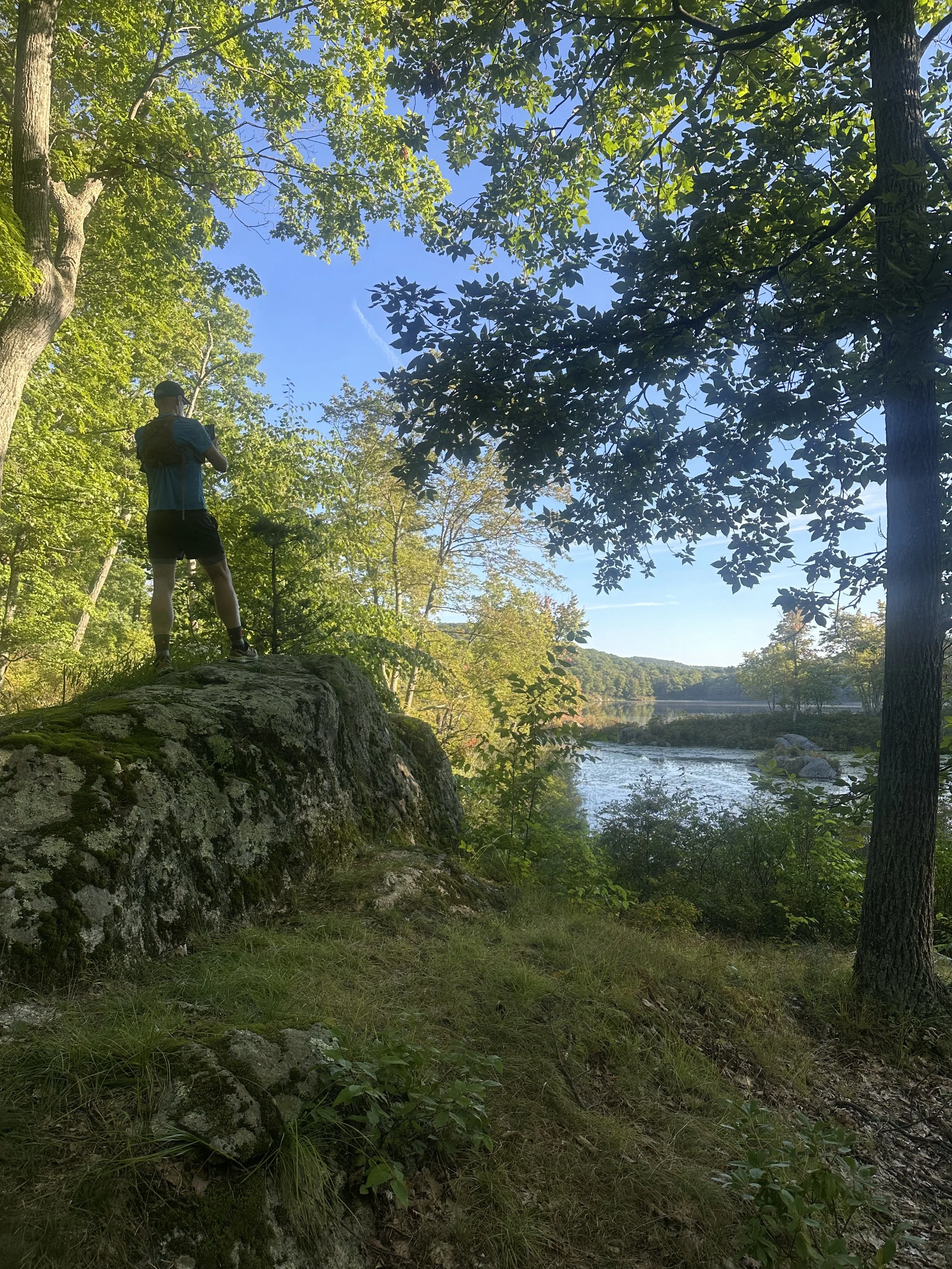
Yesterday, I took an 8 mile run through rocky terrain in Harriman State Park in New York. Beautiful late summer weather and great company and conversation as I ran alongside two ultra-marathon runner friends. I, of course, was running barefoot.
Afterwards, my feet and legs were sore and tired.
So, I decided to spend some time doing restorative exercises to assist in my post exercise recovery:
I started with:
Legs up the wall - good for relieving tired muscles
The hip hinge with legs straight - also helps stretch tight hamstrings
But I figured, let’s attend to more parts:
So I added toe spacers to stretch and restore my tired feet
And I added a strap— looped around my back and over the balls of my feet —to stretch the calves.
Hamstrings, calves, toes…
But wait, I thought, here’s a good opportunity to illustrate how our body parts are affecting and pulling on each other. So I made a couple adjustments and snapped a few photos.
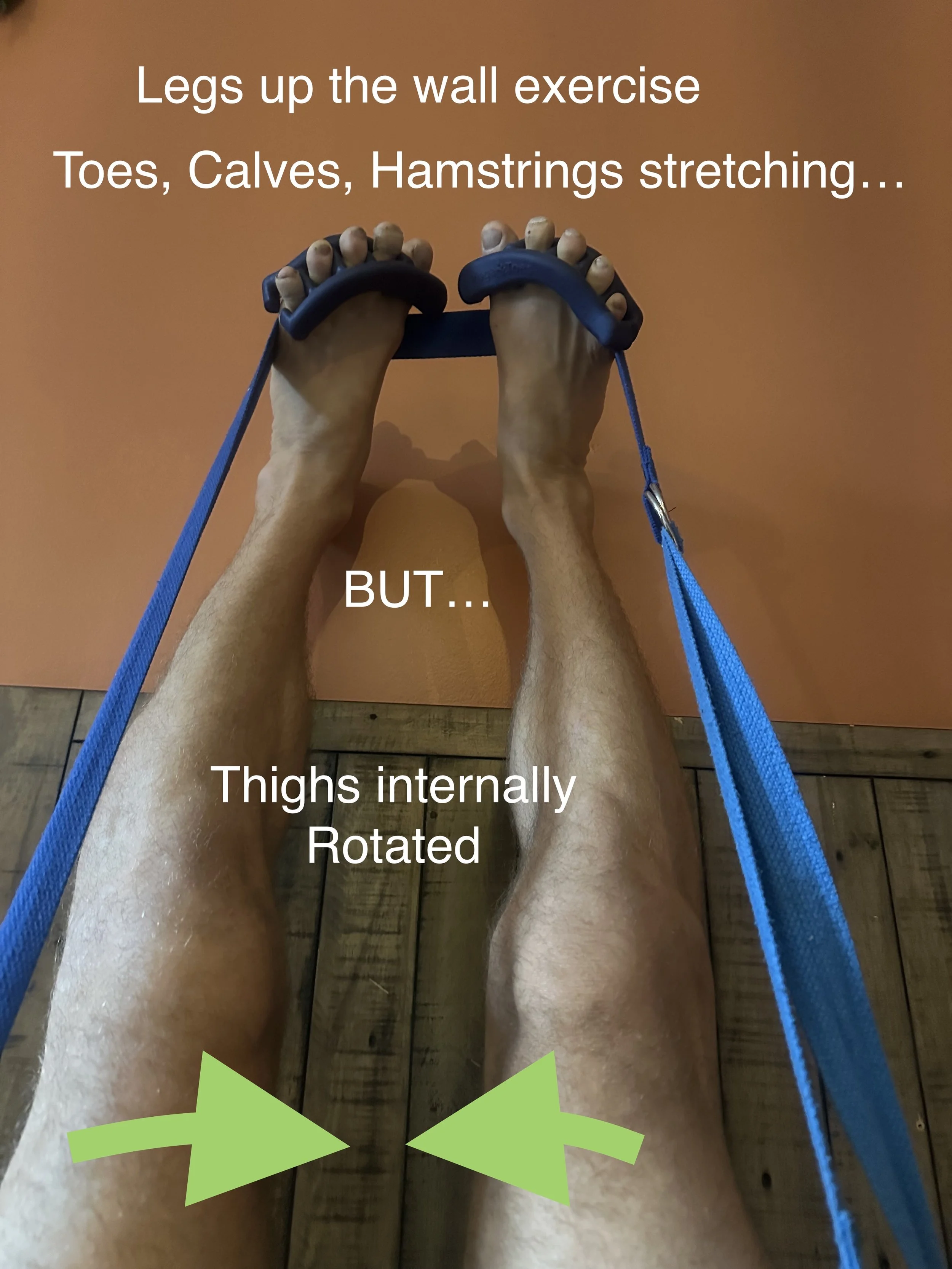
In the 1st photo, my thighs are actually a bit internally rotated - you can tell by my kneecaps slightly angled toward each other.
Not the best position for walking or running because it can relate to things like knee strain and less hip stability.
But hip internal rotation (knees coming together) can be the body’s way of accommodating tight calves or feet!
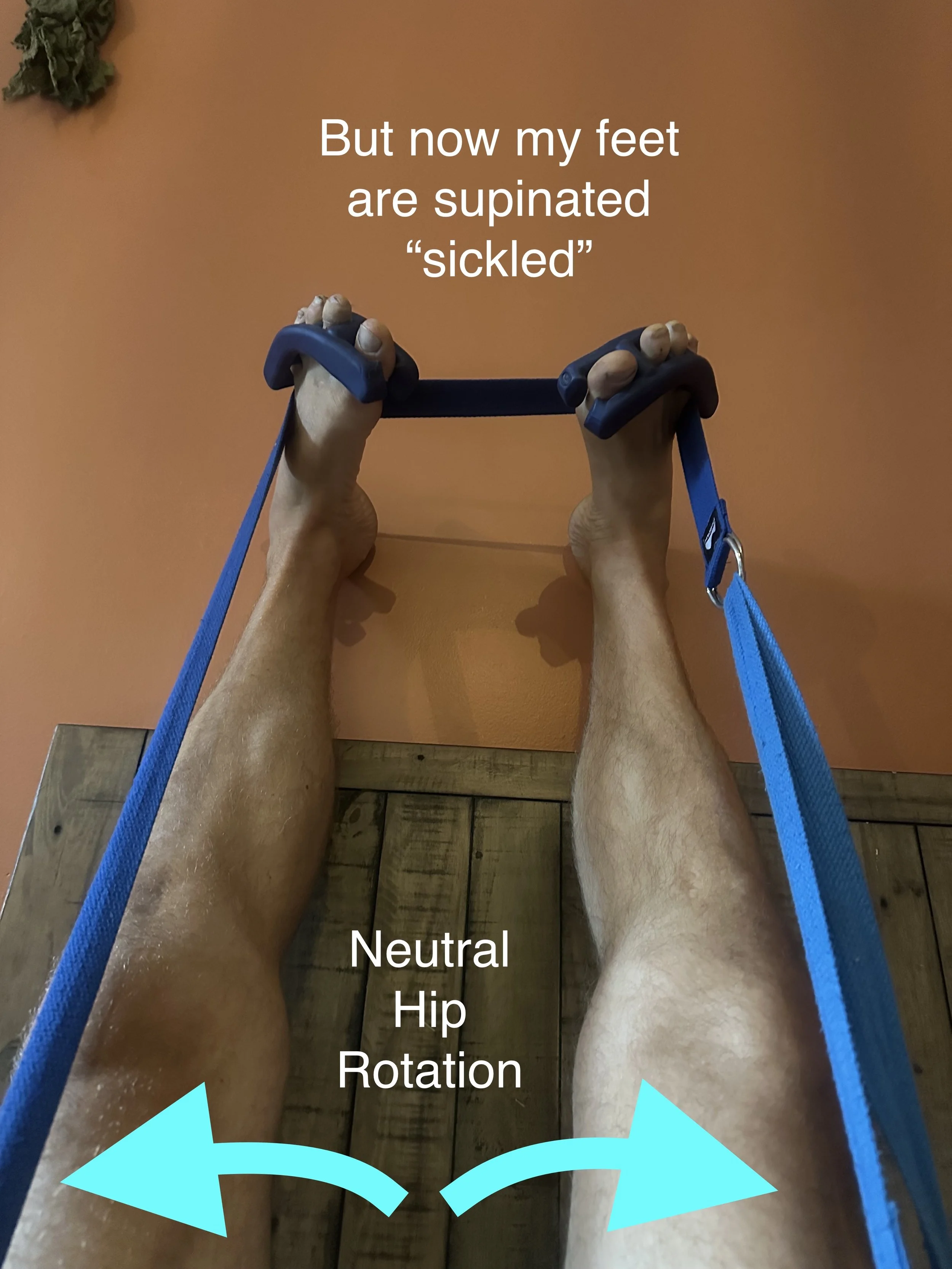
So, in the 2nd photo, I’ve re-adjusted for that compensation pattern and rotated my hips to a neutral position (even though it looks like my kneecaps are turning outward)…
This puts my hamstrings and calves into a more effective stretch (feels so good!)— BUT…
Look at what happened to my feet! Can you see that they’re “sickled” (supinated)? In other words, the insides of my feet are no longer touching the strap.
When my thighs are neutral, it pulls my feet “out of place” - from being flat. And this is illustrative of what’s happening for many of us all the time when walking around!
Immobile feet require other parts such as the ankles, knees, and hips to be displaced to less optimal positions, but stabilizing the hips will often pull stiff feet into unstable positions.
It’s like both ends of the legs are fighting each other.
Really, it’s just the body’s way of seeking out the paths of least resistance and accommodating the positions we put ourselves into most of the time. Unfortunately - that leads, over time, to becoming prone to injury and developing more aches and pains.
Like the phrase “A rose is a rose is a rose”— when it comes to the body, “a stretch is not a stretch is not a stretch”.
How you stretch and what you intend to stretch and how you position your parts — matters.
This is why it’s important to understand the relationship between our parts and to strive for a balance between both mobility and stability.
And it’s why so much of my movement coaching and practice focus on these details and nuances.
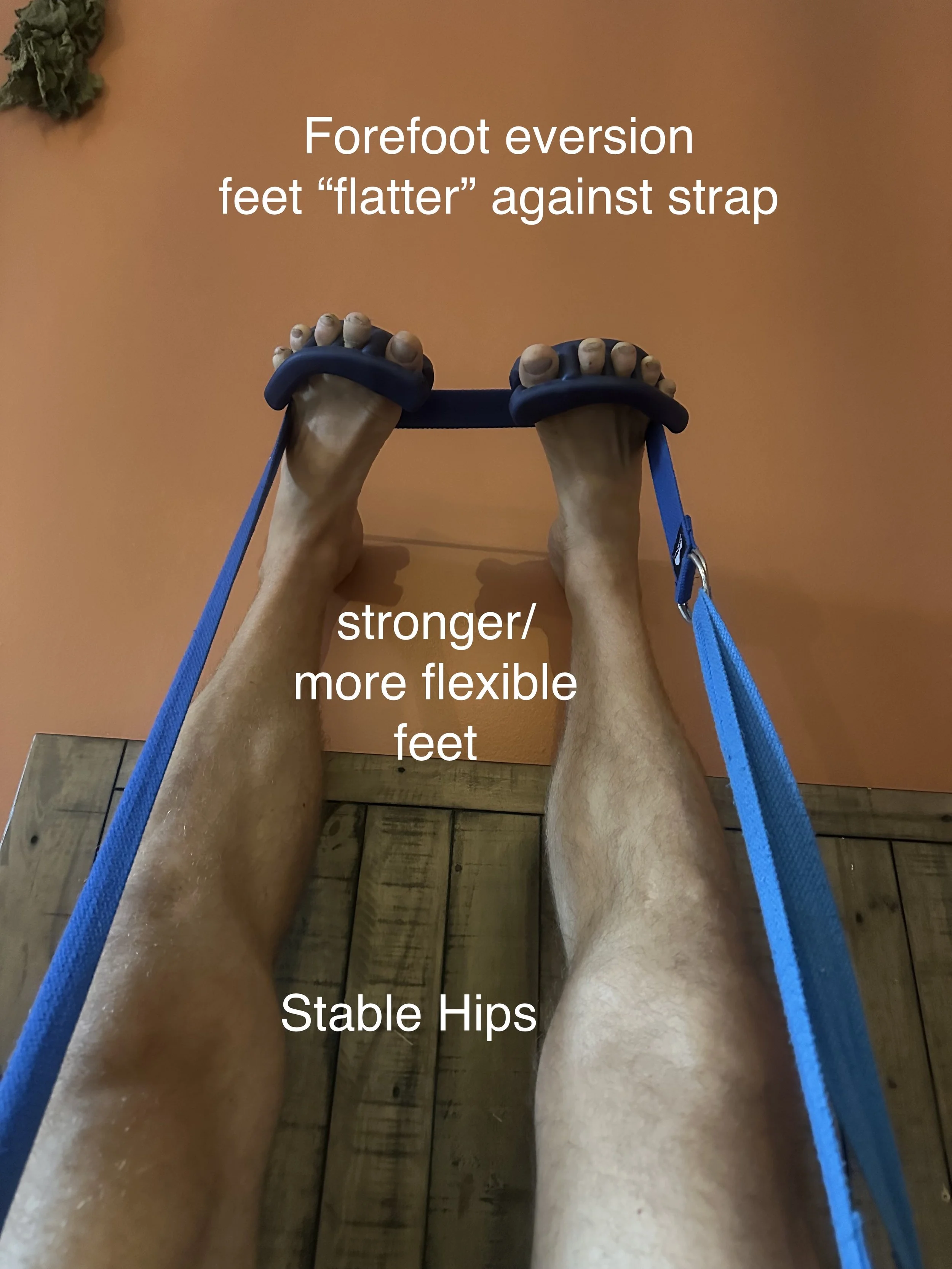
In the 3rd photo, I’m actively holding my hips stable in neutral rotation (kneecaps seem to be turned outwards) and now I’m also using my foot muscles to “flatten” the inside of my feet back to the strap (also called “forefoot eversion). All the while stretching my toes, calves and hamstrings.
If we’re used to thinking about the body as separate parts, putting this all together may seem complicated.
But as we begin to understand our body in terms of how all our parts relate, if eventually makes sense in a simple way.
And why does that matter?
In the end, for me, I want my flexible feet and strong hips to carry me over whatever terrain I encounter while enjoying the company of friends.
What experiences do you want your body to carry you through?
If you’d like help in exploring the relationships between your body’s parts and your life’s goals, consider booking a Free Alignment Wayfinding Session